Where to Drink Serious Sake in Shibuya, Tokyo: Eight Spots Worth Seeking Out
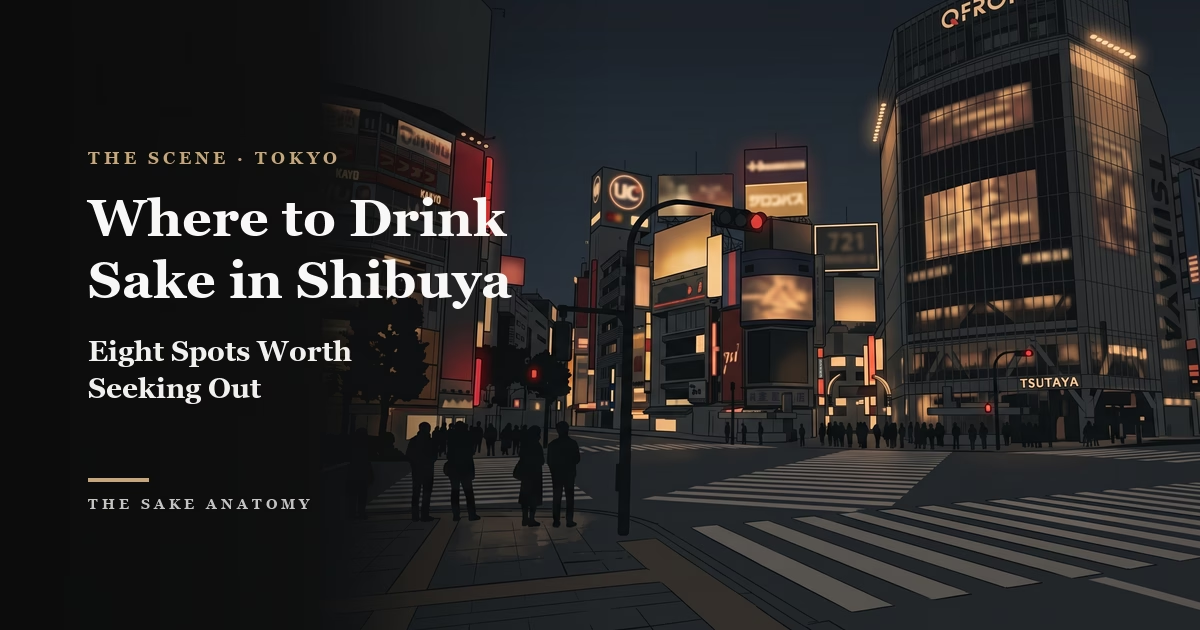
Shibuya is the loudest neighborhood on this list by a wide margin — the scramble crossing, the wall of screens above it, department stores stacked ten stories high. It is also one of Tokyo’s biggest rail hubs, which is precisely why the drinking scene tucked into its backstreets, particularly the slope of Dogenzaka rising away from the station, has stayed so dense: office workers, students, and a large expat and tourist population all funnel through the same few blocks every night. Nonbei Yokocho, the tiny Showa-era alley of matchbox bars squeezed under the elevated tracks, is the postcard version of that scene, though its bars lean more toward whisky and general drinks than sake specifically.
The real sake depth is a few minutes further up the hill. From a liquor-shop standing bar pouring nothing but Fukushima labels to a one-seating-a-day kappo counter where the owner picks your sake herself, Shibuya has a genuinely deep scene once you step past the crossing. Shibuya is big enough that a short list would leave out too much, so this one runs to eight spots, split into three tiers: two special-occasion picks, one classic standing bar, and five places for a regular night out.
The same rule as always applies: we didn’t judge by taste. Every place below earned its spot on a specific, checkable kind of commitment — a wide standing selection, a tasting-flight format, a pairing-first kitchen, or a clear specialisation. One trait done exceptionally well is enough; a place doesn’t need to hit every mark.
For a special occasion
Kuhara (久原), tucked into the quiet stretch between Shibuya and Ebisu, is a husband-and-wife kappo counter that takes a single seating a day. It has held a Michelin Bib Gourmand every year from 2023 to 2025 — not a star, but an official Michelin Guide listing for genuinely good cooking at a fair price. The proprietress selects the sake herself, matched to both the season’s ingredients and the individual guest’s taste, rather than working from a fixed pairing menu. Dinner runs roughly ¥15,000–20,000.
Sushi Kazumasa (鮨一正), a few minutes from Shibuya’s east exit, is an Edomae sushi counter built around genuinely rare sake rather than a standard reserve list — Aramasa No.6, the ultra-premium SAKE HUNDRED label, and seasonal bottlings of Kokuryu like Ishidaya and Nizaemon. Dinner averages around ¥25,000; lunch courses start around ¥10,000.
The kakuuchi: drink standing, one prefecture only
Tachinomi Nagi (立呑み なぎ), a short walk into Dogenzaka, pours nothing but sake from Fukushima — one of Japan’s most decorated sake prefectures — with 25 or more labels rotating through 100ml glasses at around ¥500–600 each. It’s standing-room only, which keeps the bill down and the turnover fast enough that you can work through several bottles in an hour without anyone raising an eyebrow.
For a regular night out
Nihonshu Genka Sakagura, Shibuya Honten (日本酒原価酒蔵 渋谷本店) is the flagship of a chain that sells sake at cost price, from around ¥226 a glass, using custom bottling designed to stay fresh without repeated opening and closing. All-you-can-drink plans covering 30–35 labels run ¥980–1,530. Being a chain flagship isn’t usually a selling point, but the honten designation here means it’s the original location the whole concept is built around.
Washoku Izakaya MARU (和食居酒屋 MARU) in Shinsen keeps 40-plus labels with an unusual emphasis on Tochigi prefecture — a region better known abroad for strawberries than sake, which makes this one of the more educational stops on the list. Budget runs ¥3,000–4,000.
Junmai Specialist YATA (純米酒専門YATA), another Dogenzaka standing bar, pours only junmai-classified sake — no added distilled alcohol, ever — from around 30 labels. A 45-minute guided tasting flight runs ¥2,000, with individual pours from ¥700, and staff are used to walking newcomers through the category from scratch.
Sake Gallery Tsubo no Naka (日本酒ギャラリー 壺の中), also on Dogenzaka, stocks 72 labels from across the country and charges a flat ¥3,600 for unlimited time and pours — and unusually, lets you bring your own food. It rewards a slow night: no clock pressure, no food markup, just the sake list.
Sakeba (渋谷の日本酒ダイニング sakeba), three minutes from Shibuya’s new south exit, is the accessible version of the pairing-course idea: certified sake sommeliers on staff build washoku pairing sets at a fraction of what Kuhara or Sushi Kazumasa charge, with dinner typically landing around ¥4,000–8,000.
Frequently asked questions
Do these bars and restaurants have English menus or English-speaking staff?
All eight have an English-language Tabelog listing, which is a solid signal of experience hosting non-Japanese guests, and Sushi Kazumasa also takes reservations through the English-language platform TableCheck.
Which of these needs a reservation the furthest in advance?
Kuhara, since it seats only one group per day. Sushi Kazumasa should also be booked ahead given its size and price point.
Where is the cheapest place to try a wide range of sake in Shibuya?
Nihonshu Genka Sakagura Shibuya Honten, where an all-you-can-drink plan covering 30–35 labels runs ¥980–1,530, or Tachinomi Nagi, where standing pours start around ¥500.
What is the difference between Kuhara and Sushi Kazumasa as a special-occasion pick?
Kuhara is about personal curation: the proprietress picks sake to match your taste and the season. Sushi Kazumasa is about rarity: a reserve list built around bottles like Aramasa No.6 and SAKE HUNDRED that are hard to find poured by the glass anywhere.
New to the format these bars are built around? Start with What Is an Izakaya?, then brush up on serving temperature before you go.
For more small, precise notes on sake science and culture, follow along on Instagram @thesakeanatomy.