
Kanpai: What Japanese Toasting Culture Really Means
Kanpai (乾杯) means “dry the cup”, yet nobody empties it. What the Japanese toast really signals, why nobody drinks first, and when to say kenpai.
Events, shops, bars, and the people of the sake world.
Kanpai (乾杯) means “dry the cup”, yet nobody empties it. What the Japanese toast really signals, why nobody drinks first, and when to say kenpai.
The International Wine Challenge named a junmai ginjo its Champion Sake 2026, beating the daiginjo field. Plus GI Yamagata at ten, Yoshinogawa retiring its flagship, and what kojic acid does to bacteria.
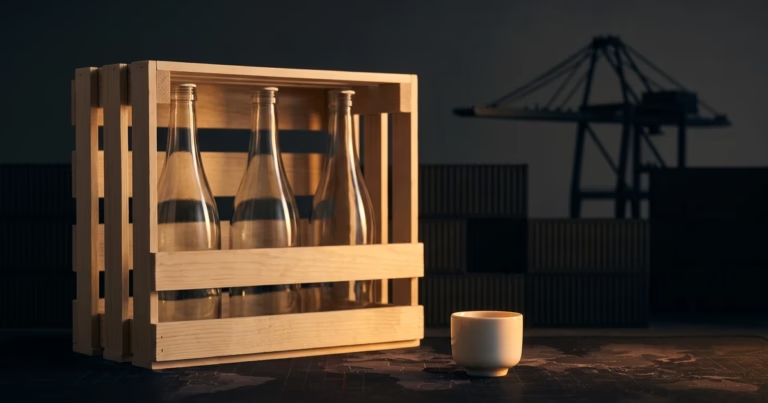
Japan’s tax agency has asked for ¥5.32bn to promote the drinks industry, with ¥2.79bn for exports. What that money buys, and what it means for drinkers in New York and London.
Sake abroad is served differently in Tokyo and New York: temperature, vessel and pour all change. What differs, and what the export data explains.

What is an izakaya? Japan’s casual pub where you linger over drinks and small plates. Here’s what the word means, how the night flows, and why it’s sake’s natural home.