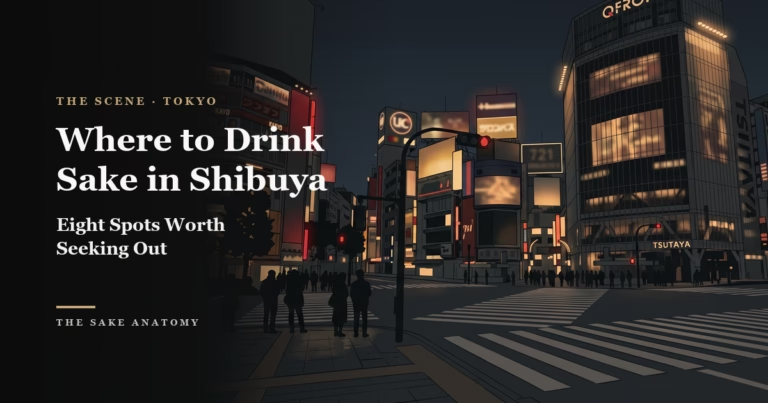
Where to Drink Serious Sake in Kagurazaka, Tokyo: Four Spots Worth Seeking Out
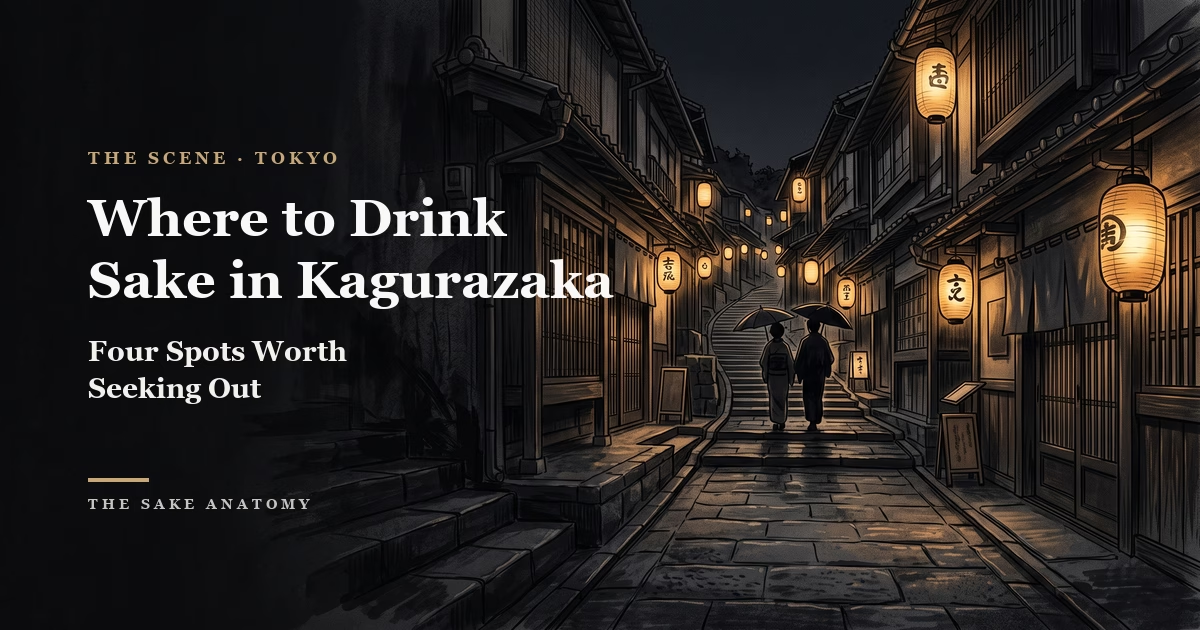
Kagurazaka sits on a steep hill in Shinjuku ward, a few minutes’ walk from Iidabashi Station, and it doesn’t feel like the rest of Tokyo. The neighborhood grew up as a geisha district in the Edo and Meiji periods, and the layout still shows it: a stone-paved main slope lined with old shopfronts, forking off into a warren of narrow flagstone alleys where traditional restaurants and hidden bars sit behind unmarked doors. A wave of French residents settled here in the 20th century, so the area is sometimes called Tokyo’s “Little Paris” — patisseries and wine bistros now sit comfortably alongside izakaya and kappo restaurants, with almost none of the neon of Shinjuku proper just down the hill.
It also has more good sake within a five-minute walk than almost any other neighborhood in Tokyo. But “good sake” and “a bar that takes sake seriously” are not the same thing. Plenty of izakaya keep a decent bottle or two on hand; a handful build the entire evening around it. This guide is about the second kind.
How we picked these four
We didn’t judge by taste — that’s subjective, and every spot below is well reviewed. Instead we looked for a specific, checkable kind of commitment: a genuinely wide standing selection, a way to taste several sakes side by side, a kitchen built around pairing rather than sake as an afterthought, or a clear specialisation that no generalist izakaya bothers with. A place doesn’t need to hit all four — one done exceptionally well is enough.
Where can you try the widest range of sake in one sitting?
Sakashita Sake Storage (坂下良酒倉庫), a hidden-away sake specialist a minute from Iidabashi Station at the foot of Kagurazaka, rotates around 70 sakes from across the country with the seasons. Pours start at 60ml, with 90ml and 180ml options, so you can work through several bottles in one sitting for roughly the price of a couple of full glasses elsewhere. The kitchen is run by a chef who trained at a well-known kappo restaurant in Ebisu and builds the food menu specifically to sit alongside the sake list, not the other way around.
Budget: roughly ¥6,000–8,000 for dinner. Reservations recommended, especially on weekends.
Where can you drink through a huge list without watching the bill?
Noie (のいえ) is a converted house down a Kagurazaka backstreet, built around a self-pour system: display cases of sake on each floor, over 100 labels in all, and ¥2,950 buys two hours of unlimited pours. Volume pricing like that usually raises an obvious question — is the selection actually good, or just big? In our own visits the answer has been the former: a well-chosen list rather than one padded out for quantity.
Budget: ¥2,950 for two hours of sake, food ordered separately. We could not confirm English-language support here at the time of writing.
Where does a Michelin star meet a serious sake pairing?
Fushikino (ふしきの) opened in a Kagurazaka backstreet in 2011 and earned a Michelin star the following year. Chef Yoshio Aramaki, trained in the Kyoto ryotei tradition, builds a seasonal kaiseki course with cuisine, sake, and even the tableware treated as one composed experience rather than sake as a drink poured alongside the food. A dedicated sake pairing course is available from an additional ¥4,400.
We haven’t seen the full bottle list here — the point of a visit is the composed pairing, not browsing a shelf — so we can’t speak to breadth of selection. What we can vouch for, from firsthand visits, is the pairing itself: exceptional cooking matched course by course to specific sake.
Budget: dinner averages around ¥30,000; a lunch kaiseki course starts around ¥11,000, plus the pairing supplement.
Where can you drink deep into a single prefecture instead of wide across the country?
Botchiriya (ぼっちりや), formally “Tosa no Sake to Umaimono,” is a kakuuchi — a liquor shop that lets you drink standing at the counter — devoted entirely to Kochi (Tosa) prefecture, which alone is home to more than a dozen breweries. Standing pours run from ¥700 a glass, and the selection rotates daily, so repeat visits mean new bottles rather than the same list. The food follows the same regional logic: bonito, ginger, and other Kochi specialities instead of a generic izakaya menu.
The commitment here isn’t breadth, it’s depth in a single region that most Tokyo bars don’t bother covering.
Budget: roughly ¥1,000–3,000.
Frequently asked questions
Do any of these have English menus or English-speaking staff?
Sakashita Sake Storage, Fushikino, and Botchiriya each have an English-language Tabelog listing, which is a reasonable signal of experience hosting non-Japanese guests. We could not confirm the same for Noie at the time of writing.
Do I need a reservation?
For Fushikino and Sakashita Sake Storage, yes, especially on weekends. Noie and Botchiriya can often take walk-ins outside peak times, but Kagurazaka gets busy on weekend evenings regardless.
What is the actual difference between a kakuuchi and a regular sake bar?
A kakuuchi is historically a liquor shop that lets customers drink standing at the counter, buying retail stock rather than ordering off a bar menu. Botchiriya keeps that format. The other three here are closer to a conventional bar or restaurant with table service.
Which of these is best for a first-time sake drinker?
Sakashita Sake Storage, since the small pour sizes make it easy and inexpensive to compare several very different sakes in one visit without committing to a full glass of anything you might not like.
New to the format these bars are built around? Start with What Is an Izakaya?, then brush up on serving temperature before you go, since a few of these bars will ask how you want it.
For more small, precise notes on sake science and culture, follow along on Instagram @thesakeanatomy.