
How to Order From a Sake List You Cannot Read
The kanji are not the problem. The missing serving size is. What a Japanese sake list actually tells you, what it leaves out, and the one order that always works.
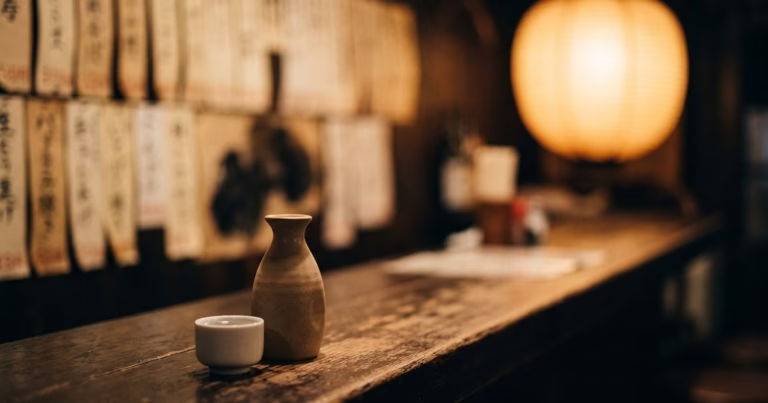
The kanji are not the problem. The missing serving size is. What a Japanese sake list actually tells you, what it leaves out, and the one order that always works.
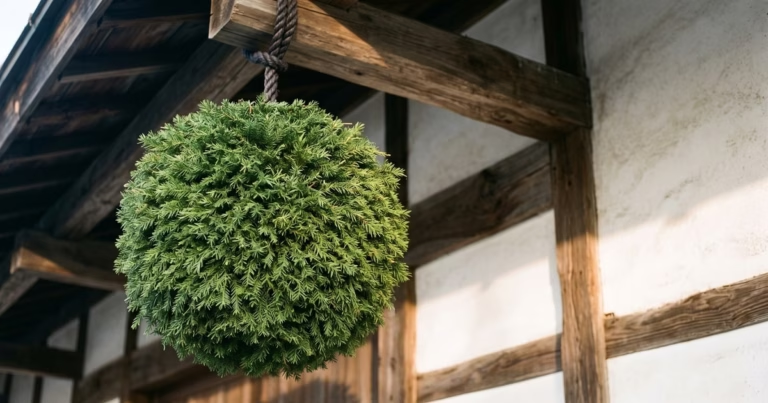
Most Japanese sake breweries do not accept visitors, and the reasons have nothing to do with you. How booking actually works, and the one month that changes everything.
Japan’s tax agency has asked for ¥5.32bn to promote the drinks industry, with ¥2.79bn for exports. What that money buys, and what it means for drinkers in New York and London.
Sake abroad is served differently in Tokyo and New York: temperature, vessel and pour all change. What differs, and what the export data explains.
What a sake brewery tour actually involves: the rooms you walk through, why the season decides what you see, and why you may be asked to skip nattō.
Japan had 1,104 working sake breweries in BY2024 and record exports in 2025. Both are true. Here is what the National Tax Agency numbers actually show.
The toji is a sake brewery’s chief brewer — and, until recently, a seasonal contractor who arrived each winter with his own crew. What the role really is.

Niigata sake is Japan’s lightest, driest style. How snow, soft water and a 1980s decision aimed at Tokyo created tanrei karakuchi.
Muroka means a sake skipped activated-carbon filtration, not that it was never filtered. What charcoal removes, what it costs, what the label means.
No evidence says sake causes worse hangovers than wine. The research points to dose — and to the fact that sake arrives in cups nobody can count.