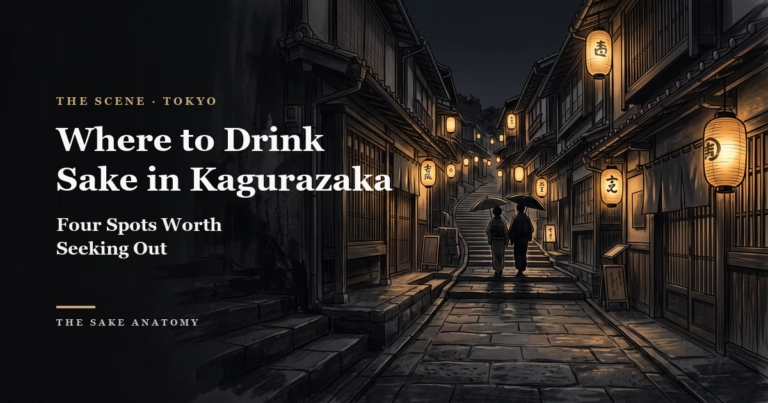
Where to Drink Serious Sake in London: Six Spots Worth Seeking Out
London’s serious sake scene doesn’t sit in one walkable cluster — it runs from a working brewery under a railway arch near London Bridge to a Michelin-starred kaiseki room in Mayfair, by way of a bottle shop with its own bar in Covent Garden. That spread says something: sake here is still a specialist pursuit, kept alive by a handful of committed operators rather than sitting on every izakaya menu. So this guide runs citywide rather than by neighbourhood, covering six spots chosen for one specific, checkable kind of commitment each.
How we picked these six
Same rule as everywhere else on this site: we didn’t judge by taste, and we don’t fabricate ratings or claims. Every place below earned its spot on a specific, checkable kind of commitment — a wide selection, a tasting-flight format, a pairing-first kitchen, a clear specialisation, or in one case, an actual brewery on site. Because a citywide list still needs a kakuuchi-style equivalent and an upscale anchor, we’ve included the closest thing London has to a standing bottle shop with a bar, plus a Michelin-starred pick for anyone who wants the pairing taken as seriously as the wine list.
Where can you drink sake straight from the tank?
Kanpai, tucked into a railway arch on Druid Street near London Bridge, is the UK’s first sake brewery — and its taproom is Europe’s only sake taproom pouring straight from the tanks a few metres away. Ten taps rotate through the brewery’s own namazake (unpasteurised, unfiltered sake), backed by a kitchen built to match. Saturday tours walk through the brewing process and finish with a guided tasting; select Fridays offer a hands-on brewing day for small groups.
Where does a Michelin-starred sommelier take sake this seriously?
Umu, a one-Michelin-starred Mayfair restaurant built around Kyoto-style kaiseki (per the 2026 MICHELIN Guide UK), carries a sake list of more than 100 labels curated by head sommelier Ryan Johnson, who holds the Kikisake-shi sake-sommelier certification. The list runs from everyday junmai to vintage-declaring bottles from producers like Kuheiji in Aichi, with some rarities priced upward of £400 — the pick on this list for anyone who wants sake treated with the same seriousness as the wine.
Where’s London’s biggest sake list?
Sakagura, spread across two floors on Heddon Street, carries more than 200 sake labels — many available in the UK only here — anchored by a dedicated sake bar on the ground floor next to intimate dining booths, with an 11-seat kappo counter in the basement for anyone who wants to watch the kitchen work. It’s the widest single sake list on this list, full stop.
Where can you buy a bottle and taste it on the spot?
Moto, a sake bar, shop, and eatery in Covent Garden, is the UK’s first venue built around that exact combination — walk in to buy a bottle, or sit down and drink one, with every label carrying its own tasting notes and food-pairing suggestion. Moto imports directly from small producers, including bottles that have never been exported outside Japan, and runs its own “Sake School” classes for anyone who wants the education alongside the drink.
Where’s the easiest way to taste your way across styles?
Yamatora, a sushi and yakitori restaurant on Finchley Road in Hampstead, organises its 17-strong sake list by flavour note rather than technical grade — earthy and mineral, fresh and crisp, fruity and aromatic — and builds tasting flights of four 50ml pours around those categories. It’s a low-stakes way to taste the differences between styles without already knowing the vocabulary.
Where does the kitchen brew its own sake?
Dinings SW3, chef Masaki Sugisaki’s izakaya-glossy Knightsbridge restaurant, pours two own-label sakes — 78 Kin and 78 Gin — brewed in collaboration with the family-run Konotomo brewery in Shiga, alongside a wider list that runs deep into small-batch producers chosen for balance and purity over showiness. It’s as close as this list gets to a pairing designed from the brewery up.
Frequently asked questions
Which of these is best for a first-time sake drinker?
Yamatora, since its four-pour flights are organised by flavour note rather than technical grade, making it easy to taste the differences without already knowing the vocabulary.
Can I visit all six in one trip?
Not easily on foot. These six spots sit in six different parts of the city: London Bridge, Mayfair, Soho, Covent Garden, Hampstead, and Knightsbridge. Treat this as a citywide list to work through over multiple visits rather than a single crawl.
Do I need a reservation?
Kanpai and Moto take walk-ins comfortably. Umu, Sakagura, and Dinings SW3 are worth booking ahead, especially for dinner service or their counter seating specifically.
What’s the difference between Moto and the others?
Moto is built to be a shop first — you can buy a bottle to take home the same way you’d order a glass to drink there. The rest are primarily restaurants or bars where sake is ordered by the glass or bottle to drink on-site.
New to the format some of these kitchens are built around? Start with What Is an Izakaya?, then brush up on serving temperature before you go.
For more small, precise notes on sake science and culture, follow along on Instagram @thesakeanatomy.